
Call us Today
1300 034 818Australian homes face a unique climate challenge. Scorching summers that push past 40°C in parts of Sydney, Melbourne, and Adelaide give way to winters cold enough to send heating bills soaring. While most homeowners think about wall insulation, roof batts, and draught seals, one of the most overlooked thermal barriers in any house sits right in front of the windows.
Your curtains.
Windows are responsible for a significant share of heat gain in summer and heat loss in winter. The right curtains act as a soft thermal shield, trapping a layer of still air between the glass and the room. That buffer slows heat transfer in both directions, keeping interiors comfortable without forcing your air conditioning or heater to work overtime.
This guide walks you through everything you need to know about choosing curtains that genuinely improve insulation in Australian conditions, from fabric weight and lining types to fitting methods and room-by-room considerations.
Most Australians associate insulation with ceiling batts and wall cavities, yet windows remain one of the weakest thermal links in any building envelope. A single pane of glass conducts heat roughly 15 times faster than an insulated wall of the same area. Even double-glazed windows, while far more efficient, still transfer heat at a rate that impacts indoor comfort.
In summer, north- and west-facing windows funnel radiant heat directly into living spaces. In winter, those same windows bleed warmth outward, leaving rooms closest to the glass noticeably colder than the rest of the house. The result is a heater or air conditioner that cycles more often, consuming more energy and driving up quarterly bills.
Insulated curtains address this problem at its source. By hanging close to the glass and extending past the window frame on all sides, a well-fitted curtain creates a pocket of trapped air that dramatically slows heat exchange. It is one of the most cost-effective thermal upgrades any Australian homeowner can make, and it delivers comfort improvements you can feel the moment the curtains are drawn.
Not every curtain provides meaningful insulation. A lightweight voile or sheer panel, for example, filters sunlight beautifully but does very little to slow heat transfer. For a curtain to function as a genuine thermal barrier, several factors need to work together.
Fabric density and weight. Heavier fabrics with a tighter weave trap more air within their fibres, reducing convective heat movement between the glass and the room. Fabrics in the 200-300 GSM range and above tend to deliver the strongest insulating performance.
Lining. A dedicated thermal lining bonded or sewn to the back of the curtain reflects radiant heat and adds an extra layer of still air. Unlined curtains, regardless of fabric weight, lose a significant portion of their insulating potential.
Fit and coverage. A curtain that stops short of the windowsill, sits away from the wall, or leaves wide gaps at the sides allows convection currents to circulate freely around it. Floor-length curtains mounted close to the ceiling and fitted with returns or pelmets at the top and sides seal the air pocket and maximise thermal performance.
Colour and reflectivity. Lighter-coloured fabrics and metallic-backed linings reflect more solar radiation in summer, while darker tones absorb and retain warmth in winter. In the Australian context, where summer heat is often the bigger concern, lighter colours with reflective linings tend to offer the best year-round balance.
Fabric choice is the foundation of any insulated curtain. In the Australian market, a handful of materials consistently outperform the rest when it comes to controlling heat transfer.
Velvet. Dense, heavy, and naturally insulating, velvet is one of the finest choices for thermal curtains in Australia. Its pile traps pockets of air close to the surface, creating an effective buffer against both heat and cold. Velvet also absorbs sound, making it a strong choice for bedrooms and media rooms that face busy streets.
Heavy cotton and cotton-blend fabrics. Tightly woven cotton in a substantial weight offers excellent insulation without the formality of velvet. Cotton drapes well, accepts dye beautifully, and pairs easily with thermal linings. It is particularly suited to living areas where a relaxed, premium aesthetic is the goal.
Polyester-blend blockout fabrics. Engineered specifically for light and heat control, blockout fabrics feature multiple woven or coated layers that block sunlight almost entirely. Many incorporate a reflective middle layer that bounces radiant heat back toward the glass in summer. These are workhorses for west-facing windows and bedrooms where total darkness is desired.
Wool and wool-blend textiles. Wool is a natural insulator with excellent moisture-wicking properties. In cooler parts of Australia, such as the Southern Highlands, Blue Mountains, and parts of Victoria and Tasmania, wool curtains provide warmth and breathability that synthetic fabrics struggle to match.
The team at The Curtain Lab works with premium fabric suppliers to source materials that deliver both visual refinement and genuine thermal performance, ensuring every window treatment is as functional as it is beautiful.
Blockout curtains deserve special attention because they serve a dual purpose: total light elimination and substantial thermal control. A quality blockout curtain uses a multi-layer construction, typically a decorative face fabric bonded to a dense core and a reflective or opaque backing. This construction does more than just darken a room.
The core layer interrupts radiant heat transfer, while the tightly sealed edges reduce air movement around the glass. In practical terms, a well-fitted set of blockout curtains can reduce heat gain through a window by up to 25% in summer and cut heat loss by a similar margin in winter.
For bedrooms, nurseries, and home theatres, blockout curtains are often the first recommendation. But they are equally valuable in open-plan living areas with large expanses of glass, particularly where those windows face north or west and receive intense afternoon sun during the warmer months.
One of the smartest approaches to window insulation in Australian homes is a layered curtain system. By pairing a sheer curtain on an inner track with a heavier lined curtain on an outer track, homeowners gain precise control over light, privacy, and temperature throughout the day.
During the cooler months, the sheers can remain open while the heavier curtains are drawn, trapping warmth inside. In summer, the sheers filter harsh sunlight and reduce glare on their own, while the blockout curtains can be closed during peak heat to create a cool, shaded interior.
This dual-track approach also adds visual depth and texture to a room. A softly gathered sheer behind a structured, lined curtain creates a sense of considered luxury, softening hard window lines and adding volume to the window treatment. It is a design decision that serves form and function equally.
The lining behind a curtain is arguably more important than the face fabric when it comes to thermal performance. Three main types of lining are used in insulated window treatments, and each serves a different purpose.
Standard cotton lining. A basic cotton sateen lining protects the face fabric from UV damage and adds a modest layer of insulation. It is suitable for rooms where light control is secondary and the primary goal is fabric preservation.
Thermal lining. Also called insulated lining, this uses a layer of acrylic foam or coated backing to reflect heat and reduce thermal transfer through the glass. Thermal linings are the go-to choice for living rooms, dining rooms, and any space where energy efficiency is a priority without the need for total darkness.
Blockout lining. The most effective option for both light elimination and insulation. Blockout linings feature multiple coated layers that block virtually all light and significantly reduce heat transfer. They are the standard recommendation for bedrooms and for any window that receives direct afternoon sun.
When selecting a lining, it is worth discussing your priorities with a specialist. A curtain consultant can match the right lining to your fabric, your window orientation, and your comfort goals, ensuring each room performs at its best.
A curtain's insulating ability is only as good as its fit. Off-the-rack curtains are manufactured in standard sizes, and those sizes rarely align with the precise dimensions of a given window. Gaps at the top, sides, or bottom allow warm air to escape in winter and hot air to seep in during summer, effectively short-circuiting the thermal barrier.
Custom-made curtains are measured and tailored to each individual window opening. They can be designed to sit flush against the wall on both sides, extend past the frame at the top to meet a pelmet or ceiling-mounted track, and fall all the way to the floor or even puddle slightly for a complete seal.
This precision is not just about aesthetics. Every centimetre of coverage translates into measurable energy savings. A properly fitted curtain with returns at the sides can reduce heat loss through a window by up to 40% compared with an ill-fitting alternative, making custom fabrication a sound investment in both comfort and running costs.
Different rooms have different thermal demands, and the best curtain strategy takes those differences into account.
Living areas. These tend to have the largest windows and the highest occupancy during the day. A layered approach with sheers and lined curtains works exceptionally well here, allowing natural light when desired and full thermal protection when the sun is strongest or temperatures drop after dark.
Bedrooms. Sleep quality is directly affected by room temperature. Blockout curtains with thermal or blockout lining are the standard choice, providing both darkness and a stable, comfortable sleeping environment. West-facing bedrooms, in particular, benefit enormously from reflective-backed curtains that prevent the room from absorbing late-afternoon heat.
Kitchens and bathrooms. Moisture-resistant fabrics and roller blinds with insulating properties are practical alternatives to traditional curtains in wet areas. Where curtains are preferred, synthetic-blend fabrics that resist mildew and clean easily are the best fit.
Home offices. Glare control and thermal comfort during working hours are the priority. A combination of solar-filtering sheers and heavier curtains allows you to manage screen glare and room temperature independently, keeping the workspace productive throughout the day.
Technology is making insulated curtains even more effective. Motorised curtain systems allow homeowners to program their curtains to open and close on a schedule, or to respond to temperature and light sensors.
Imagine your west-facing curtains automatically closing at 2 pm during summer, just before the harshest sun hits the glass, or opening in the morning during winter to capture free solar warmth before closing again at dusk to lock that heat inside. This kind of automated thermal management reduces reliance on mechanical heating and cooling, and it can be controlled from a smartphone or integrated into a broader home automation ecosystem.
Motorisation is especially valuable for hard-to-reach windows, high ceilings, and large sliding door openings where manually drawing heavy curtains would be inconvenient. When paired with quality thermal fabric and precise custom fitting, a motorised insulated curtain system represents the most complete window insulation solution available to Australian homeowners today.
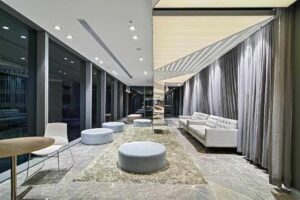
My experience with The Curtain Lab is not one you would expect…
I had a need to have the curtains in my two bedrooms cleaned.
This requires them to be done professionally as they are large and heavy, making it difficult for me to handle. They also need to be done when I am away as the bedrooms are exposed to the street.
My Dry Cleaners are excellent, whereby they come and take them down and return them in beautiful condition to rehang, all before I return home.
I had been home a few days, curtains looking lovely, had gone out for the day and when I arrived home the curtain in my bedroom had collapsed leaving the track badly bent with half the curtain hanging from it.
I emailed The Curtain Lab on a Sunday and on the Monday a young lady by the name of Andrea responded, by telephone, to my email. She arranged to meet me on the Wednesday of that week.
Andrea was obviously expecting me to arrange to purchase new curtains but on inspection she new this was not necessary. She said to me “I will take a close look and see what I can do for you”.
Of course, I was not expecting this and was happy to arrange for a new track to be installed.
Andrea did manage to re-position the track albeit still bent but the curtain is sliding along freely……for now.
Needless to say, I am delighted and have no hesitation in recommending The Curtain Lab to anyone. I will definitely call Andrea when I decide to change the look of my bedroom.
Thank You Andrea ???? Christine From Millers Point
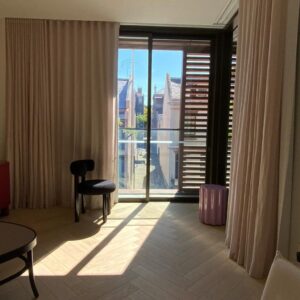
Professional, warm, and efficient with a wonderful result at the end. Highly recommended.
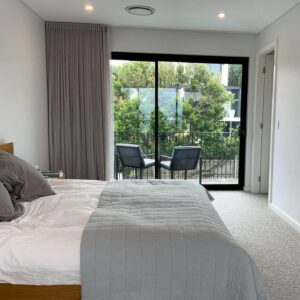
Our experience with the Curtain Lab was excellent. Great communication, wonderful style recommendations, speedy service and great product. Our new curtains and roller blinds look amazing. Definitely recommend contacting the Curtain Lab for window coverings!
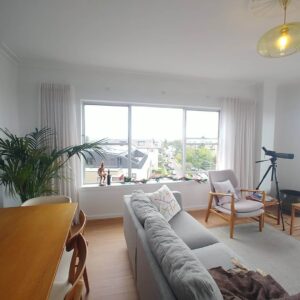
Great service, quality of product and value! Andrea went above and beyond to bring my vision for my attic to life despite the challenging angles involved. Would not hesitate to recommend to anyone!
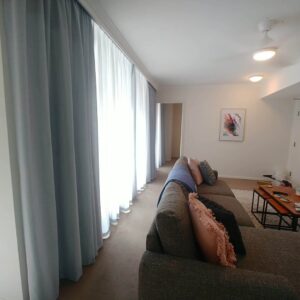
I have NEVER posted a review before and always read reviews with a grain of salt; but it would be very unfair for me not to this time. I got my first home and needed help with curtains. I am so thankful that by divine intervention I decided to hold off on my previous choice and then met Andrea. Andrea was a godsend.
She is not only a lovely person but also patient and very accommodating - making multiple phone calls and trips, extremely understanding of my demanding work schedule. This is the most genuine and honest review you would ever find! I can't recommend her enough!
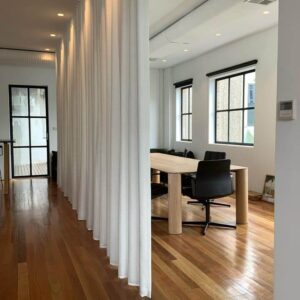
Andrea was incredibly helpful and knew her stuff. Very nice to have someone help you that you trust, knowing they have your best interests at heart!
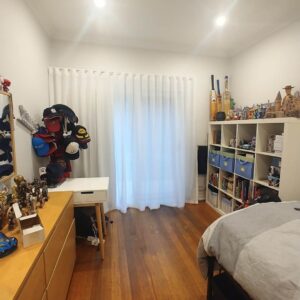
Thank you Andrea. We couldn’t be happier with our new sheers. We were so impressed with your professionalism and the outstanding results. I would definitely recommend your company to anyone looking for new curtains.
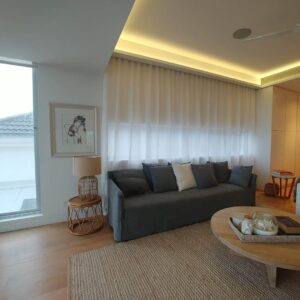
Thank you to Andrea and the Curtain Lab team! I'm super happy with the job and they're so helpful. The curtains are so lovely. Definitely recommend!


Privacy Policy | Terms And Conditions | Refund Policy
Website By:
Digitalzoop