
Call us Today
1300 034 818"Australian made" is one of the most reassuring phrases in the window furnishings world, and one of the most loosely used. It appears on everything from curtains cut and sewn in a local workroom to panels that were finished overseas and simply labelled here. For anyone weighing up custom made curtains for their home, the honest question is not whether local sounds better. It is what the difference actually changes for the quality you hang and the time you wait.
The answer is more specific, and more interesting, than a flag on a swing tag. Here is what genuinely separates Australian-made curtains from imported ones, where the quality gap is real and where it is marketing, and how the lead times compare once freight and customs are counted in.
The phrase has a legal spine, not just a patriotic one. Under the country-of-origin rules that govern these claims, a product can be described as made in Australia only if it has been substantially transformed here. For curtains, cutting, sewing and finishing the fabric locally clears that bar. Importing a finished, ready-sewn curtain and adding an Australian label does not.
That distinction matters to you as a buyer because it tells you where the craftsmanship decisions were made. A locally made curtain is cut to your measurements, squared to your fabric, hemmed and weighted, and finished by hands that answer to the same business that sold it to you. An imported panel was made to a standard size and specification a long way from your window, then sent on its way. Both can be perfectly good products. They are simply not the same thing, and the label alone will not always tell you which you are getting.
Quality is easy to claim and harder to pin down, so it helps to look at the four places the difference genuinely appears.
Fit. This is the big one. Imported ready-made curtains rely on standard sizing, and very few Australian windows match an international size chart. The result is curtains that sit too short, pool awkwardly on the floor, or leave light gaps at the edges. Made to measure curtains are cut to the exact drop and width of each window, so they hang cleanly and look intentional. For high ceilings, corner windows or wide spans of glazing, that precision stops being a nicety and becomes essential. Our guide to custom versus ready-made curtains walks through this trade-off in more detail.
Fabric grade and safety. Reputable local makers work with recognised fabric houses and hold stock that meets Australian standards, including the AS/NZS flammability requirements that apply to soft furnishings. Imported fabric can be excellent, but the further the supply chain stretches, the harder it is to verify what a fabric actually is and whether it complies. When you can see and feel the curtain and blockout fabrics before you commit, you know exactly what is going on your windows.
Finishing. The parts of a curtain that make it look expensive are largely invisible: chain-weighted hems that keep the fabric plumb, properly calculated fullness so the folds are generous rather than mean, linings matched to the room's function, and headings hand-set so they sit evenly across the track. These are the first things trimmed to hit a low import price, and the first things you notice living with a curtain day after day.
Serviceability. If an imported curtain arrives with a fault or needs altering, the fix can mean shipping it back through the same chain it came down. A locally made curtain can be reworked in the same workroom that produced it, and a warranty is only as useful as your ability to act on it. That is why a five-year fabric warranty backed by a local maker carries more practical weight than a longer promise from a supplier you cannot easily reach.
Here is where the two paths separate most clearly. A quality Sydney-made curtain is usually measured, made and installed within about three weeks, with the making itself taking roughly ten working days once fabric and measurements are confirmed. The order, the cutting plan and the sewing all happen under one roof, which is what keeps the timeline tight.
An imported custom order works to a different clock. Production overseas is only the first stage. On top of it sit international freight, customs clearance and local distribution, and those stages routinely add weeks before the goods even reach the country. Any disruption along the way, from a shipping delay to a supply shortage, lands squarely on your timeline. If you have ever waited on a parcel that took far longer than promised, you already understand the risk at scale.
To be fair to imported product, there is one timeline it wins outright. Ready-made curtains bought off a shelf are available immediately, and for a genuine last-minute need that speed is hard to beat. If your deadline is the deciding factor, our note on made to measure curtains with faster delivery explains how a local workroom can compress its own timeline when it has to.
An honest comparison admits that imported curtains have their place. If you are furnishing a short-term rental, working to a tight budget, dressing perfectly standard windows, or simply need something in place today, a well-chosen imported or ready-made panel can be a sensible, stylish answer. There is no need to overspend on bespoke tailoring for a space you will not keep, and there are plenty of good curtain options across a range of budgets worth considering.
The case for Australian-made grows stronger the longer you intend to live with the result, the less standard your windows are, and the more the room's comfort and appearance matter to you.
Because the label can be ambiguous, the smartest move is to ask direct questions before you order. Where are the curtains cut and sewn? Who holds the fabric, and does it meet Australian standards? How are alterations and warranty claims handled, and by whom? A genuine local maker answers these immediately and specifically. A supply chain that cannot name its own workroom has told you something too.
At The Curtain Lab, curtains are made locally in Sydney from quality fabrics, measured and installed by the same team, and backed by a five-year fabric warranty and a five-star rating from more than one hundred reviews. That is the practical meaning of Australian-made: not a slogan, but a short chain between the person who sews your curtain and the window it hangs in. You can read the workroom's story on the about page, or start with a proper measure through the custom made curtains service.
Thinking about dressing your windows properly? Book a measure and quote, and see the difference a locally made curtain makes before you decide.
Not automatically, but they are far more likely to fit correctly and be finished to a high standard, because they are cut to your exact windows and made by a maker you can hold accountable. Imported fabric can be excellent, though verifying grade, compliance and finishing is harder the longer the supply chain.
It means the curtain was substantially transformed in Australia, which for curtains means cut, sewn and finished here. A finished panel imported and simply labelled locally does not meet that test, so it is worth asking where the sewing actually happened.
Local custom curtains are typically measured, made and installed within about three weeks. Imported custom orders add overseas production, international freight and customs on top of that, which commonly stretches the timeline by weeks and exposes it to shipping delays.
For curtains you intend to keep for years, for non-standard windows, or where comfort and appearance matter, the fit, finishing and local serviceability usually justify the premium. For short-term or standard-window needs, imported or ready-made can be the smarter spend.
Some do and some do not. Australian soft furnishings are governed by flammability standards, and reputable local makers work with fabrics tested against them. With imported product, ask specifically whether the fabric complies rather than assuming it does.

My experience with The Curtain Lab is not one you would expect…
I had a need to have the curtains in my two bedrooms cleaned.
This requires them to be done professionally as they are large and heavy, making it difficult for me to handle. They also need to be done when I am away as the bedrooms are exposed to the street.
My Dry Cleaners are excellent, whereby they come and take them down and return them in beautiful condition to rehang, all before I return home.
I had been home a few days, curtains looking lovely, had gone out for the day and when I arrived home the curtain in my bedroom had collapsed leaving the track badly bent with half the curtain hanging from it.
I emailed The Curtain Lab on a Sunday and on the Monday a young lady by the name of Andrea responded, by telephone, to my email. She arranged to meet me on the Wednesday of that week.
Andrea was obviously expecting me to arrange to purchase new curtains but on inspection she new this was not necessary. She said to me “I will take a close look and see what I can do for you”.
Of course, I was not expecting this and was happy to arrange for a new track to be installed.
Andrea did manage to re-position the track albeit still bent but the curtain is sliding along freely……for now.
Needless to say, I am delighted and have no hesitation in recommending The Curtain Lab to anyone. I will definitely call Andrea when I decide to change the look of my bedroom.
Thank You Andrea ???? Christine From Millers Point
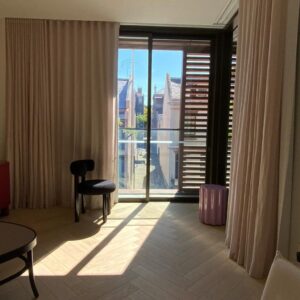
Professional, warm, and efficient with a wonderful result at the end. Highly recommended.

Our experience with the Curtain Lab was excellent. Great communication, wonderful style recommendations, speedy service and great product. Our new curtains and roller blinds look amazing. Definitely recommend contacting the Curtain Lab for window coverings!

Great service, quality of product and value! Andrea went above and beyond to bring my vision for my attic to life despite the challenging angles involved. Would not hesitate to recommend to anyone!
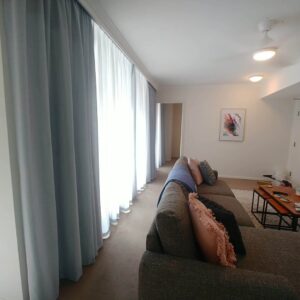
I have NEVER posted a review before and always read reviews with a grain of salt; but it would be very unfair for me not to this time. I got my first home and needed help with curtains. I am so thankful that by divine intervention I decided to hold off on my previous choice and then met Andrea. Andrea was a godsend.
She is not only a lovely person but also patient and very accommodating - making multiple phone calls and trips, extremely understanding of my demanding work schedule. This is the most genuine and honest review you would ever find! I can't recommend her enough!
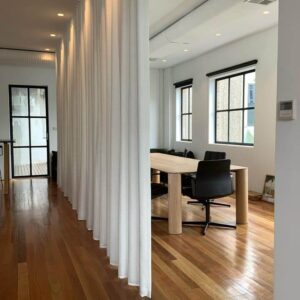
Andrea was incredibly helpful and knew her stuff. Very nice to have someone help you that you trust, knowing they have your best interests at heart!
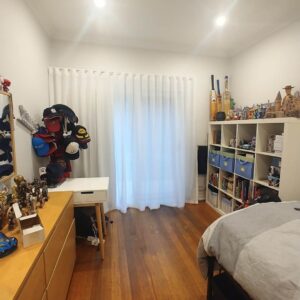
Thank you Andrea. We couldn’t be happier with our new sheers. We were so impressed with your professionalism and the outstanding results. I would definitely recommend your company to anyone looking for new curtains.

Thank you to Andrea and the Curtain Lab team! I'm super happy with the job and they're so helpful. The curtains are so lovely. Definitely recommend!


Privacy Policy | Terms And Conditions | Refund Policy
Website By:
Digitalzoop